Transforming Africa’s Agriculture Through Innovation, Education, and Sustainability.
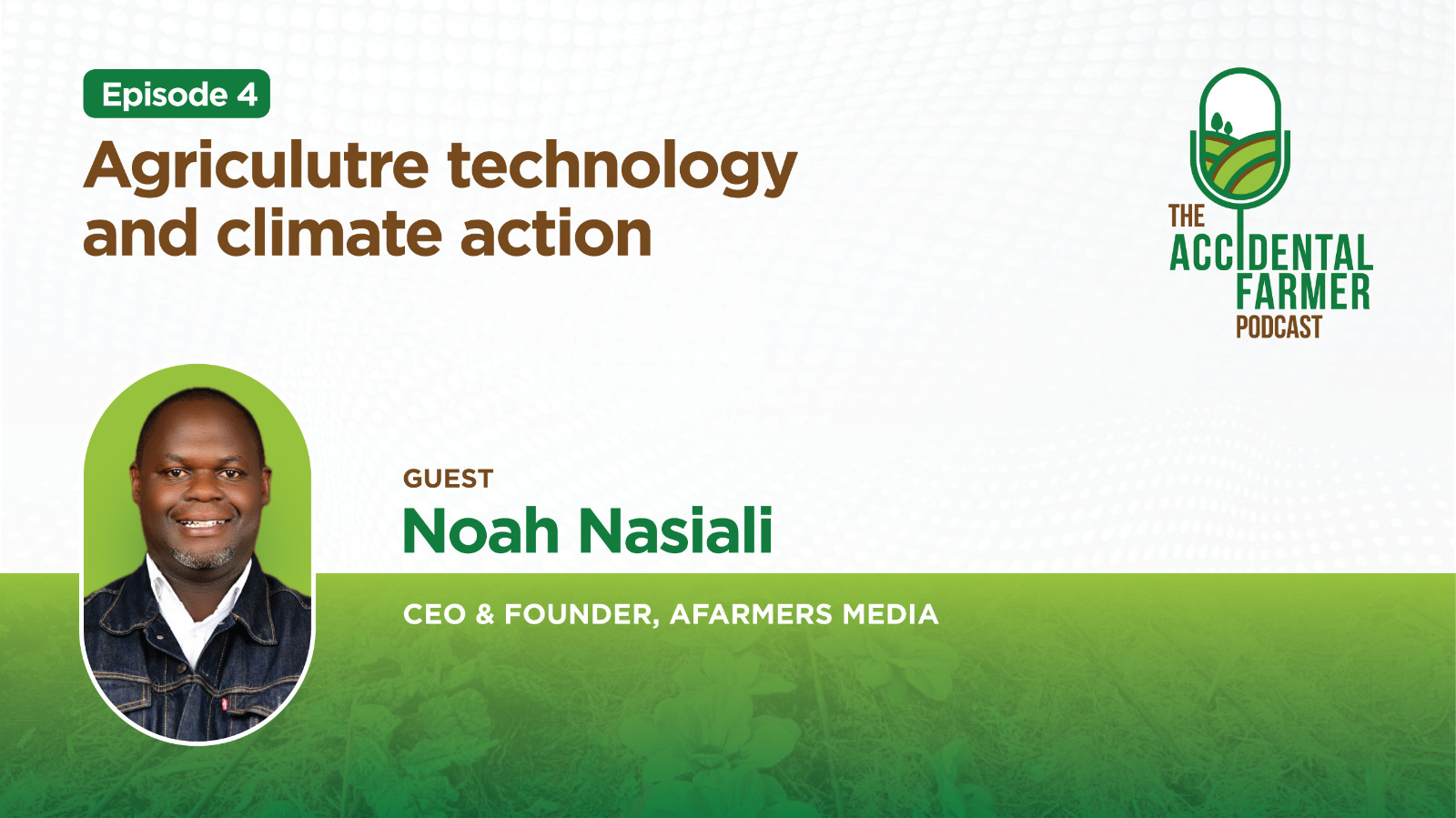
Have you ever wondered how you can take advantage of social media to commercialize your farming activities? Well, episode 4 of TheAccidental Farmer podcast features Noah Nasiali, an agri-tech innovator and social entrepreneur who founded Afarmers TV, Africa’s rstonline agri-tech TV station. The conversation with host, Joe Okelo covers Noah’s journey in agriculture, the challenges farmers face,and his insights on successful farming practices.
Noah entered agriculture after observing challenges faced by his father-in-law (a tomato farmer) and his own father (a sugar canefarmer). With a background in technology, he initially aimed to build tech solutions for farmers. Using design thinking, he decided tobecome a farmer himself to better understand the challenges rsthand, which has now been a 17-year journey.
Key Challenges in Kenyan Agriculture
Information Gap: Noah highlights the disconnect between excellent agricultural policies at the government level and the smallholderfarmers who lack awareness of these policies.
Market Access Problems: He shares a personal story of planting 75,000 cabbages and failing to sell them, despite having a contract.This experience taught him the importance of understanding markets before production.
Broker Dependency: Farmers are often at the mercy of brokers who determine prices, unlike in countries like South Africa where morestructured systems exist.
Soil Health Ignorance: Many farmers don’t test their soil, leading to declining yields despite fertilizer use. Noah became an Africa SoilHealth Ambassador after discovering the importance of soil testing.
Africa Farmers Club and Afarmers
TVAfter his cabbage failure, Noah created the Africa Farmers Club Facebook group to connect farmers and share knowledge. Initiallyaiming for 1,000 members, the group grew to 16,000 in three months and later to 60,000+ members. During COVID-19, he transformedthis into Afarmers TV when in-person farm visits became impossible.
Keys to Successful Farming
Noah identies several factors that successful farmers consistently demonstrate:
Consistency in crop production and understanding their markets
Knowledge-seeking and treating farming as a businessPresence on the farm (Noah visits his farm at least three days a week)
Technology adoption to gather information and improve practices
Soil knowledge through regular testing (at least once every three years)
Understanding their role in the agricultural ecosystem
Climate Smart Agriculture and Carbon Sequestration
Noah explains that climate smart agriculture involves adapting farming practices to climate changes, including weather prediction,appropriate crop selection, and soil regeneration. He also discusses how carbon sequestration can help farmers regenerate soils whileaddressing climate issues, though he critiques how carbon credit systems often undervalue African farmers’ contributions.
Listening On :